SONO Internal Audit System
One intelligent platform to plan, execute, monitor, and report audits—powered by RAG-

Next-Gen Internal Audits with RAG.
It enables your organization to manage end-to-end internal audits and drive smarter decisions with AI and RAG.
- %40
Internal audit software can cut audit cycle time by up to 40% and reduce manual audit tasks, increasing efficiency.
- %90
Automated audit tools can lower data entry and manual errors by up to ~90%, improving accuracy and reliability.
- %30
Organizations adopting automation report up to ~30% lower audit expenses through reduced manual time and staff costs.
AI-Powered, RAG-Driven Internal Audits
SONO Internal Audit System (SONID) brings all audit activities together in a single, intelligent platform—covering planning, execution, monitoring, reporting, and follow-up end to end. With role-based dashboards for audit managers, auditors, and unit users, SONID enables risk-driven audit planning, structured fieldwork, real-time collaboration, and continuous monitoring of findings and action plans. Powered by AI and RAG, it transforms internal auditing into a faster, smarter, and fully traceable process aligned with your institution’s needs.
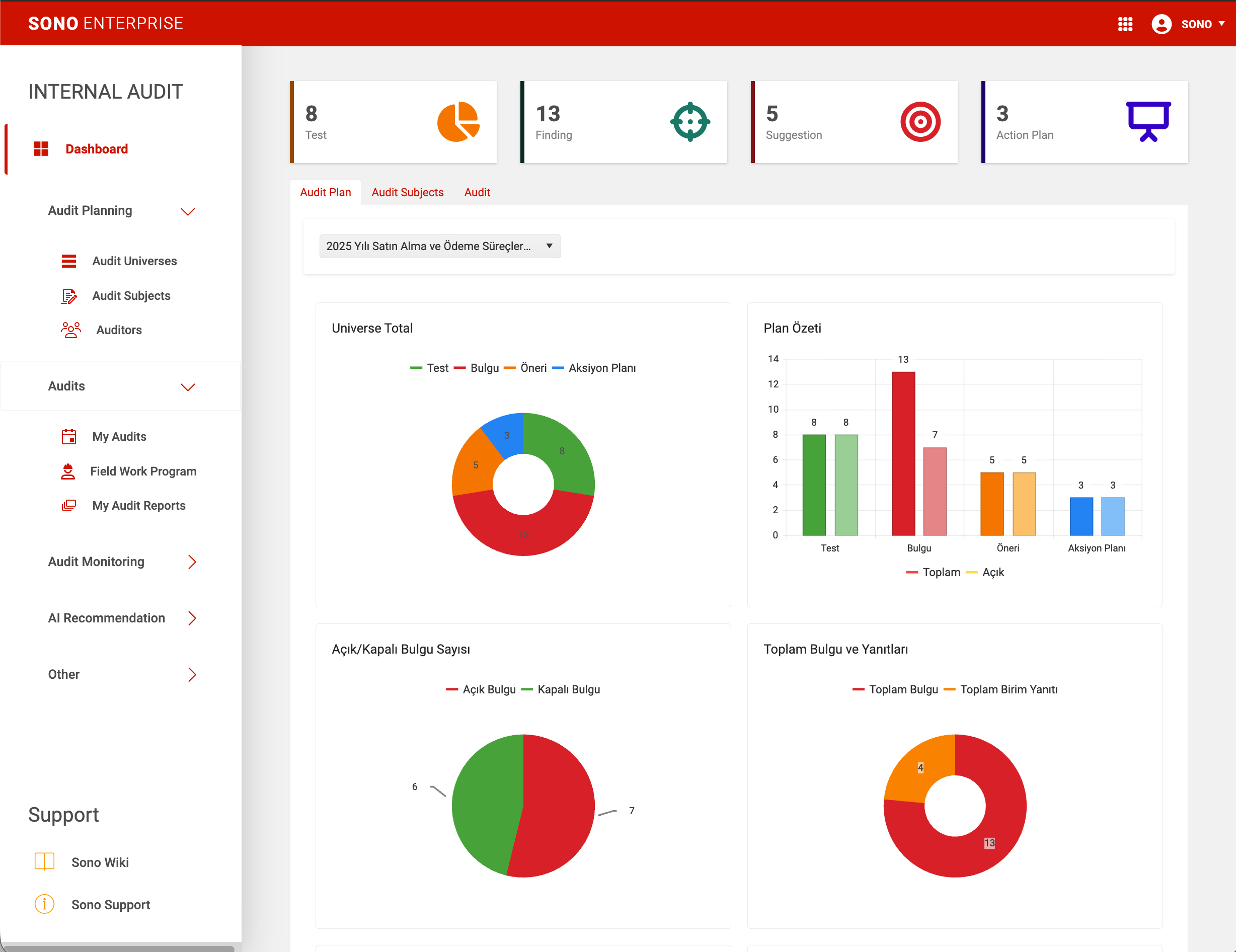
How SONID Effectively Helps You Achieve Your Goals
Audit Manager Role
Audit Planning,
Fully Under Control
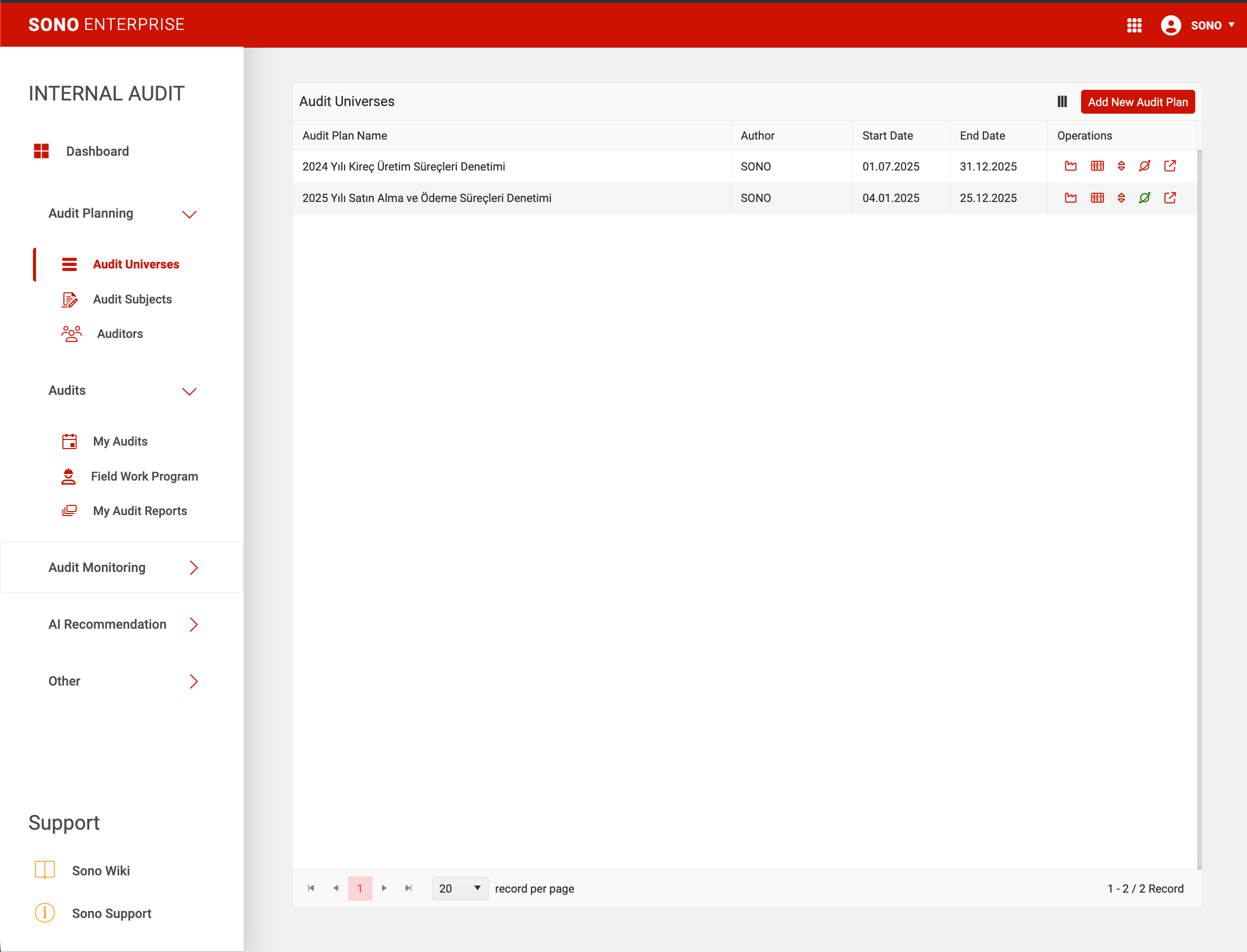
The Audit Planning Phase empowers audit managers to design strategic, macro risk-focused audit plans through a centralized dashboard. Macro risk factors are defined, weighted with impact percentages, and scored to initiate audit planning based on objective risk assessments.
The system enables full visibility into auditor resources by managing auditor profiles, competencies, certifications, trainings, and attended activities within a single platform. Audit managers can assign auditors efficiently, align skills with audit topics, and continuously evaluate auditor performance using measurable indicators.
By combining risk-based planning with structured auditor management, SONID ensures that audit efforts are prioritized, resources are optimized, and audit planning decisions are data-driven, consistent, and transparent.
Real-Time Audit Execution and Oversight
The Audit Execution and Monitoring Phase provides audit managers with complete, real-time visibility into ongoing audit activities. Audit progress is continuously tracked, fieldwork is supervised centrally, and control reports are monitored to ensure alignment with audit objectives and timelines.
Test records and finding records are monitored as they are created, enabling early detection of issues and proactive intervention when necessary. Recommendations and action plans are tracked end-to-end, ensuring accountability, timely responses, and effective follow-up across all audited units.
With centralized monitoring and structured oversight, SONID enables audit managers to maintain full control over execution quality, ensure consistency across engagements, and transform audit monitoring into a transparent, traceable, and results-driven process.
Auditor Role
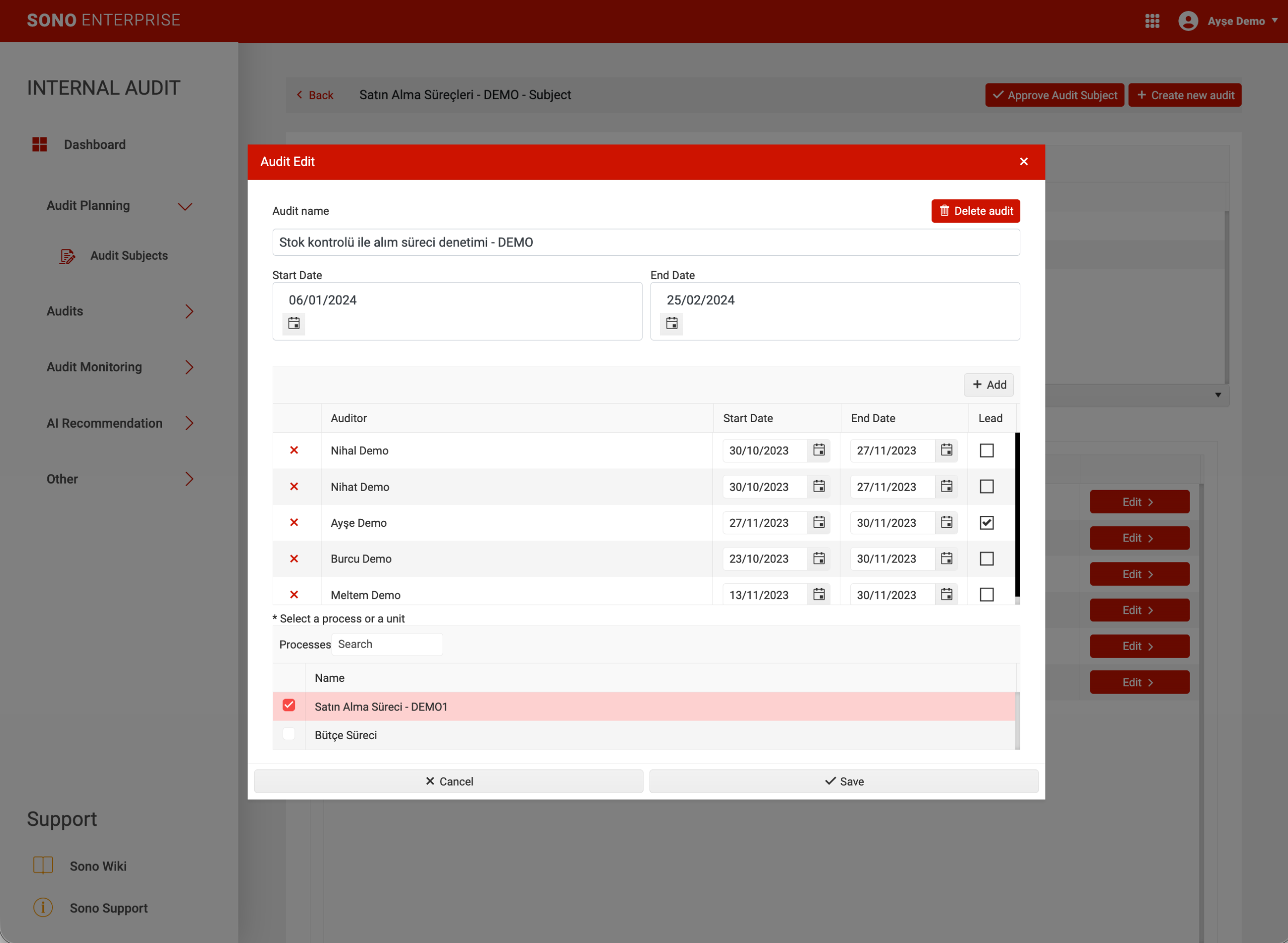
Structured and Efficient Audit Planning
The Audit Planning Phase enables auditors to plan their audits in a structured, transparent, and time-bound manner. Auditors define audit scope, timelines, and responsibilities in alignment with the audit plans assigned by audit managers.
By providing a clear framework for planning activities, SONID ensures that audits are initiated with well-defined objectives, realistic schedules, and full visibility into assigned tasks—laying a solid foundation for effective audit execution.
End-to-End, Intelligent Audit Execution
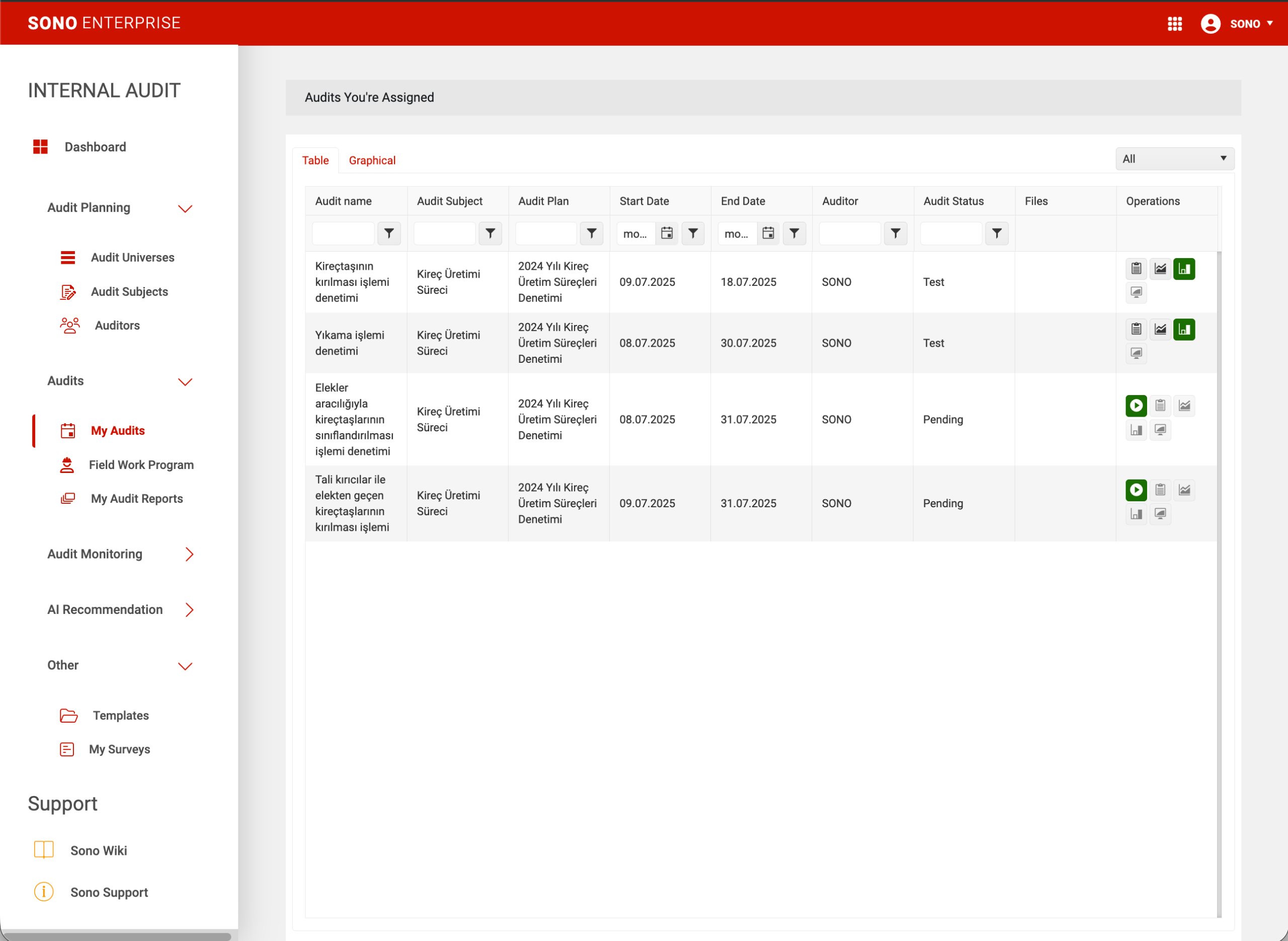
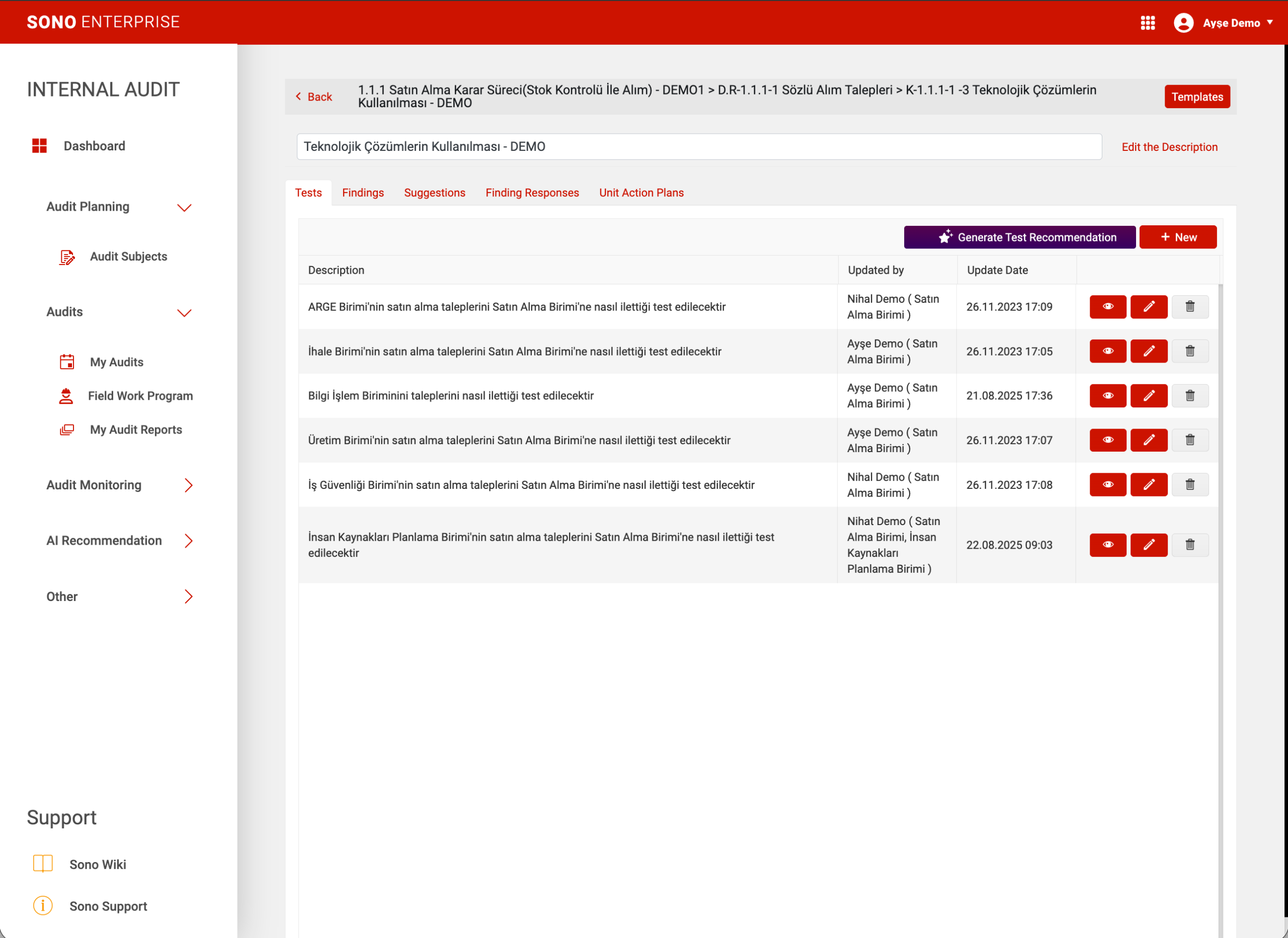
The Audit Execution Phase enables auditors to manage the entire audit lifecycle within a single, intelligent platform. From initiating audits and collecting documents to designing surveys and performing risk analysis through the Risk Control Matrix, all activities are seamlessly integrated.
With AI and RAG support, auditors receive data-driven insights while creating risk assessments, audit tests, and recommendations. Findings are recorded, categorized, and instantly shared with relevant departments through automated notifications—without waiting for audit completion.
By combining structured fieldwork, real-time communication, and intelligent recommendations, SONID accelerates audit execution, improves audit quality, and ensures continuous collaboration across all stakeholders.
Continuous Audit Monitoring and Follow-Up
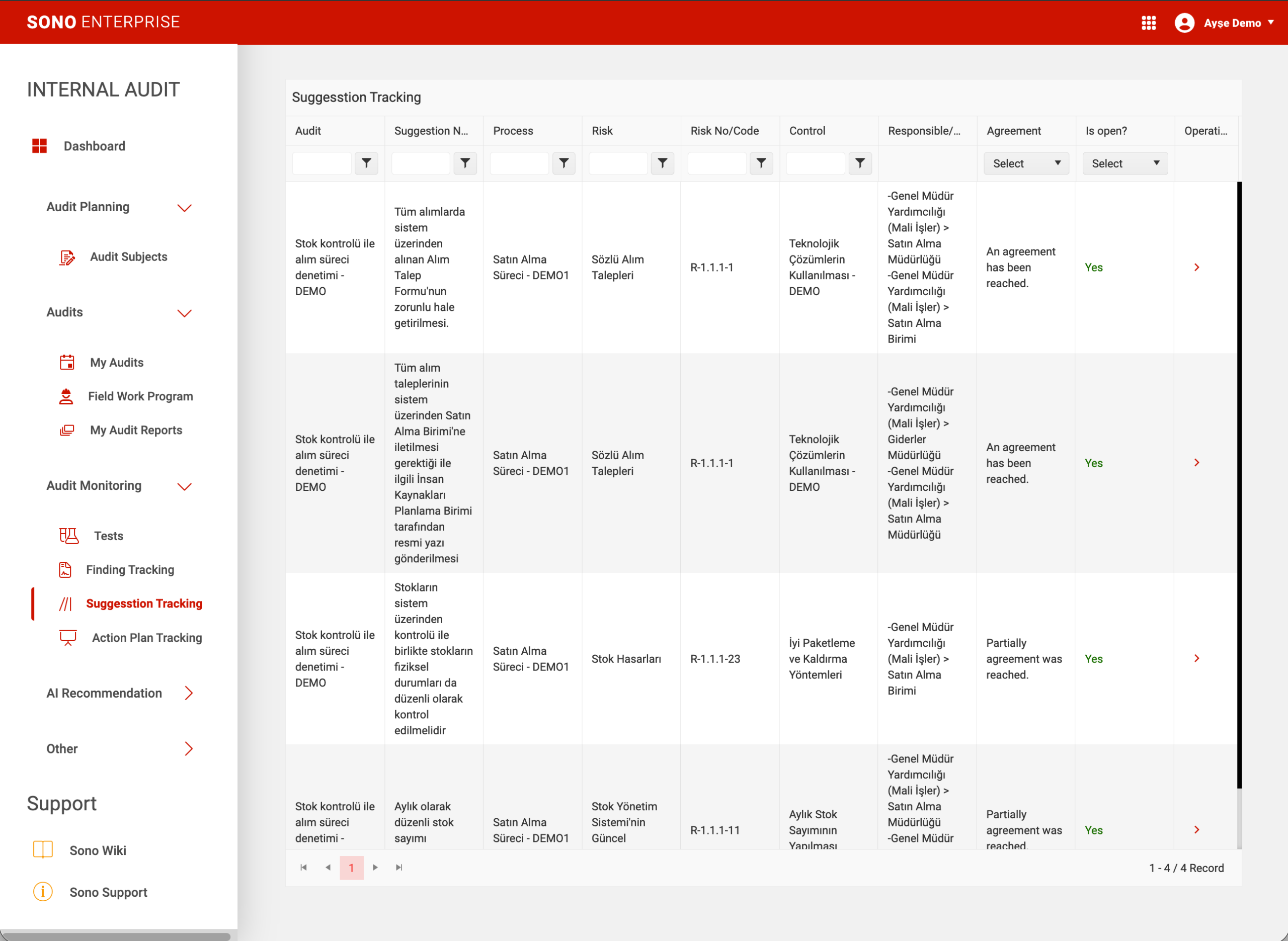
The Audit Monitoring Phase provides auditors with full visibility into post-execution audit activities through a centralized monitoring framework. Audit reports, test results, and finding records are continuously monitored to ensure accuracy, consistency, and alignment with audit objectives.
Recommendations and action records are tracked end-to-end, allowing auditors to follow progress, identify delays, and ensure timely implementation by audited units.
By transforming audit follow-up into a structured and transparent process, SONID ensures accountability, strengthens audit outcomes, and enables auditors to maintain control beyond audit completion.
RAG-Powered Audit Intelligence
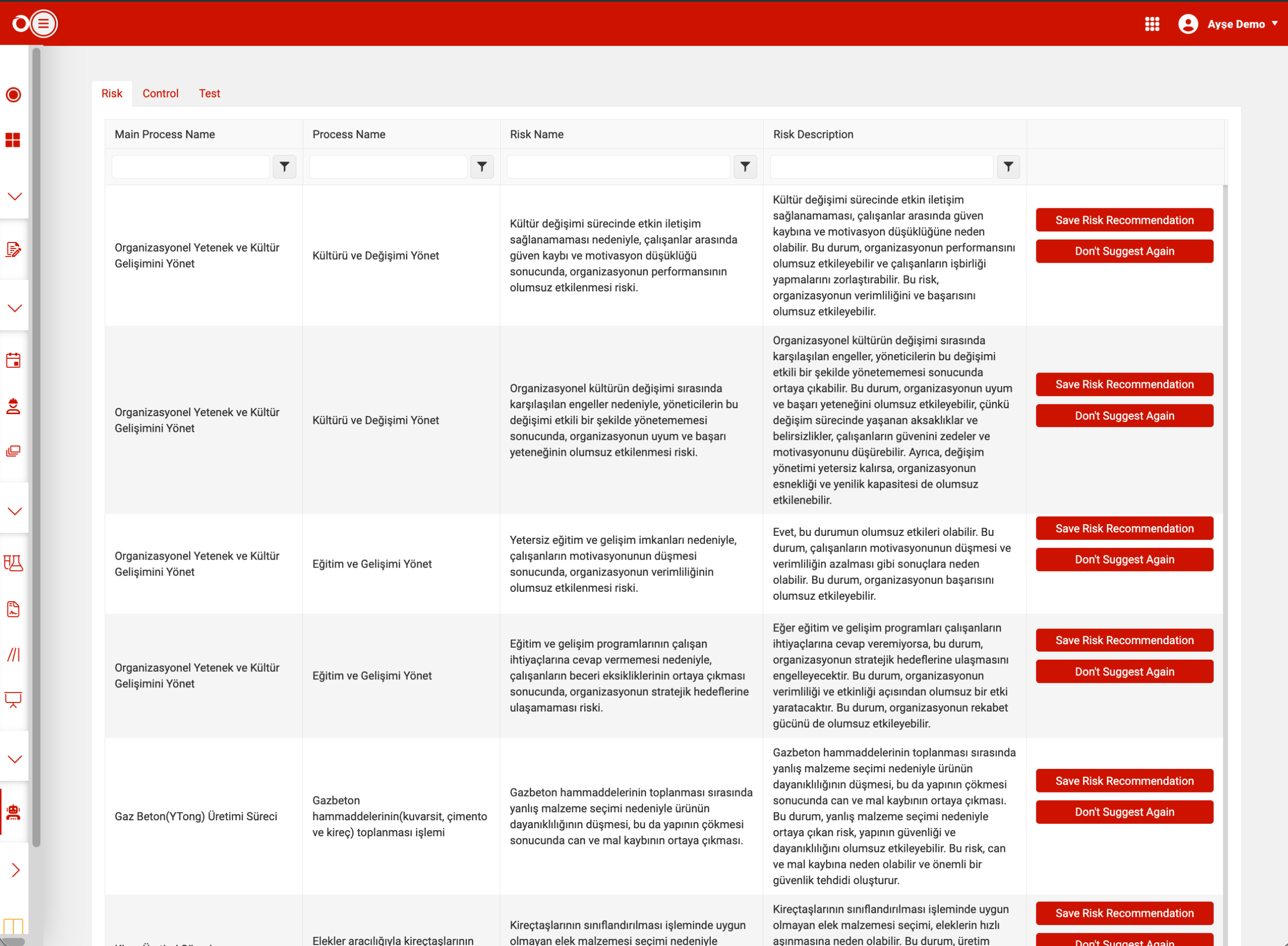
SONID’s Artificial Intelligence Infrastructure embeds advanced AI and Retrieval-Augmented Generation (RAG) capabilities directly into the internal audit lifecycle, enabling auditors to make informed, consistent, and data-driven decisions. During the Risk Control Matrix (RCM) phase, the system analyzes historical audits, institutional documents, control libraries, and prior findings to generate contextual risk and control recommendations tailored to the specific audit scope.
As audits progress, AI and RAG continuously support auditors by recommending relevant audit tests aligned with identified risks and control objectives. These recommendations help standardize audit practices, reduce reliance on manual judgment, and ensure that critical risk areas are not overlooked.
When findings are identified, the system assists in generating structured, high-quality recommendation records by leveraging organizational knowledge, regulatory frameworks, and past remediation actions. This ensures that recommendations are practical, actionable, and aligned with institutional standards.
By transforming scattered audit knowledge into an accessible corporate memory, SONID enables auditors to benefit from past experience while executing current audits. The result is faster audit execution, higher-quality outcomes, improved consistency across audit engagements, and a future-ready internal audit function powered by AI and RAG.
Auditee Role (Unit Users)
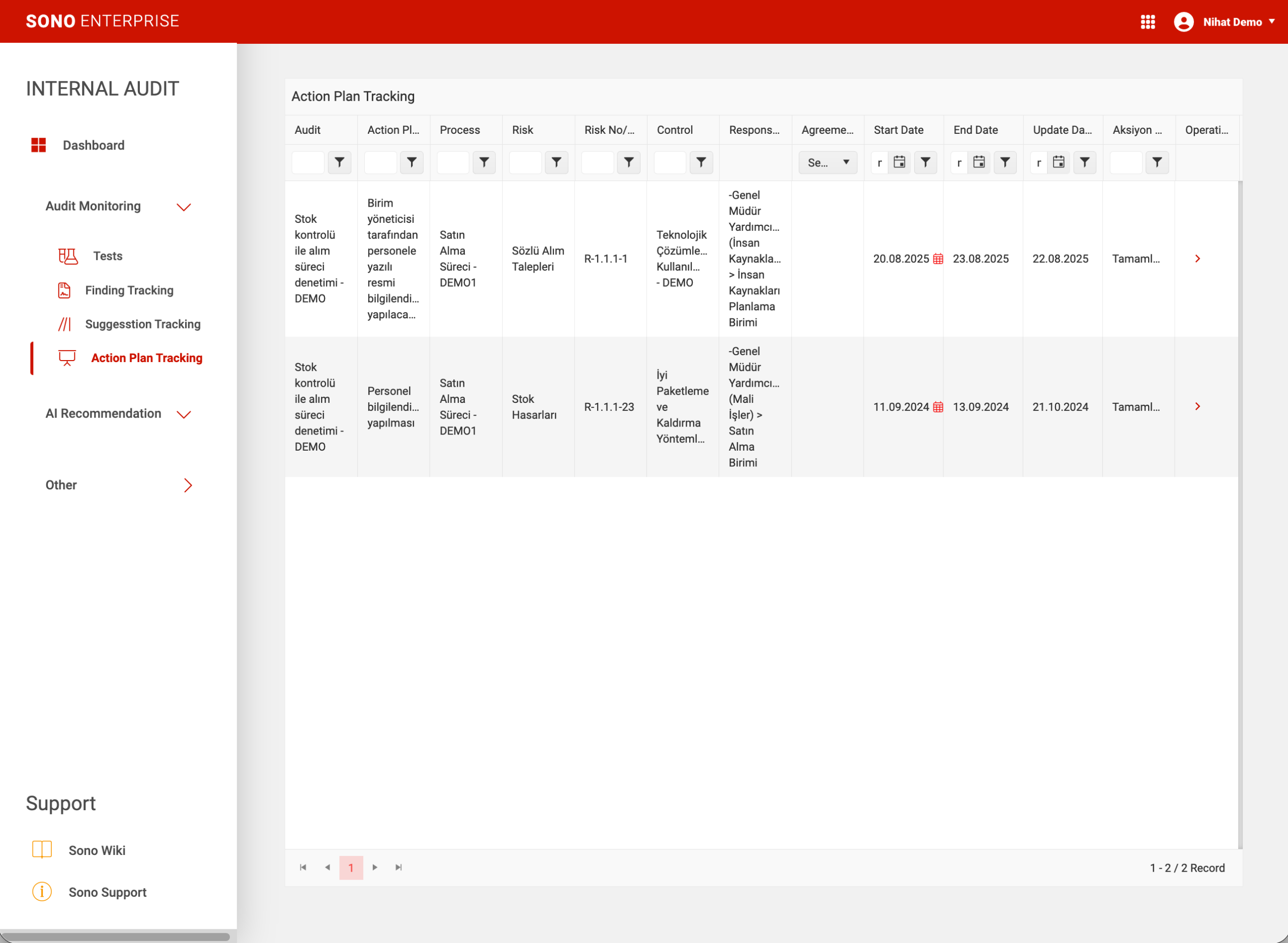
Structured Collaboration for Effective Audit Response
The Audit Execution Phase for Business Unit Users provides a clear, guided, and role-based experience through a dedicated dashboard. Unit users can easily view all findings and recommendation records related to their departments, ensuring full transparency and clarity throughout the audit process.
Through the system, units provide structured responses to audit findings and create action plans directly aligned with auditor recommendations. Progress on action plans is recorded and monitored step by step, enabling both auditors and management to track implementation status in real time.
Business Unit Users also participate actively in the audit process by completing and submitting surveys assigned to them, contributing accurate and timely information during audit preparation and execution.
By centralizing communication, action planning, and progress tracking within a single platform, SONID transforms audit interactions from fragmented exchanges into a controlled, traceable, and collaborative process—strengthening accountability, accelerating remediation, and improving overall audit effectiveness.
Measure SONID’s Impact on Your Organization
Discover SONID’s benefits for your organization instantly with our easy-to-use tool.

Frequently Asked Questions
SONO Internal Audit System (SONID) is an end-to-end internal audit management software that enables institutions to plan, execute, monitor, and report all audit activities through a single, centralized platform. It is fully customizable and designed specifically for Audit Managers, Auditors, and Unit Users.
SONID’s AI infrastructure provides intelligent support by suggesting:
Risk and control points during the RCM phase
Relevant audit test items
Recommendation records based on identified findings
This improves audit quality, consistency, and efficiency.
SONID enables audit managers to define macro risk factors, assign impact percentages, and perform macro risk assessments. Based on these assessments, audits are planned using a risk-based scoring approach, ensuring that high-risk areas are prioritized effectively.
SONID supports three main roles:
Audit Managers for planning, supervision, and performance monitoring
Auditors for executing audits, risk analysis, testing, and reporting
Auditees (Unit Users) for responding to findings, creating action plans, and tracking progress
Each role has dedicated dashboards and role-specific screens.
Yes. Auditors can define audit subheadings, prepare surveys, upload documents, perform Risk Control Matrix (RCM) analyses, create audit tests, record findings, send recommendations, and communicate with units—all within SONID, without using external tools.
Yes. SONID includes an integrated survey module that allows auditors to prepare and send surveys during the pre-audit phase. Surveys can be sent to individuals, departments, or job titles, and anonymous surveys are also supported.
Yes. SONID automatically generates audit reports in institution-specific formats by pulling validated data directly from the system. This eliminates manual reporting effort and ensures accuracy, consistency, and audit trail integrity.